News 2025
Feed
New R package: SHARK4R simplifies work with marine data
A new R package is now available on The Comprehensive R Archive Network (CRAN). SHARK4R provides researchers and environmental analysts with a tool for retrieving, quality assuring, and processing marine environmental data directly in R. The package includes client functions that connect users to several key databases, including SHARK, Dyntaxa,...

New vegetation dataset from NILS opens a window onto Sweden’s changing landscapes
A new dataset from the National Inventories of Landscapes in Sweden (NILS) is now available through GBIF Sweden, offering a uniquely detailed look at how vegetation and habitats are distributed across the country. The dataset, “National Inventories of Landscapes in Sweden: Presence-absence Vegetation data”, brings nearly two decades of systematic...

[Training course FRB-Cesab] AI for ecologists: a toolkit – 2026
The Cesab – Centre for the Synthesis and Analysis of Biodiversity – of the FRB is opening the second edition of the training course «Artifical Intelligence for ecologists: a toolkit». This five-day training course aims to initiate ecologists to AI concepts and tools. The course will be a mix of...
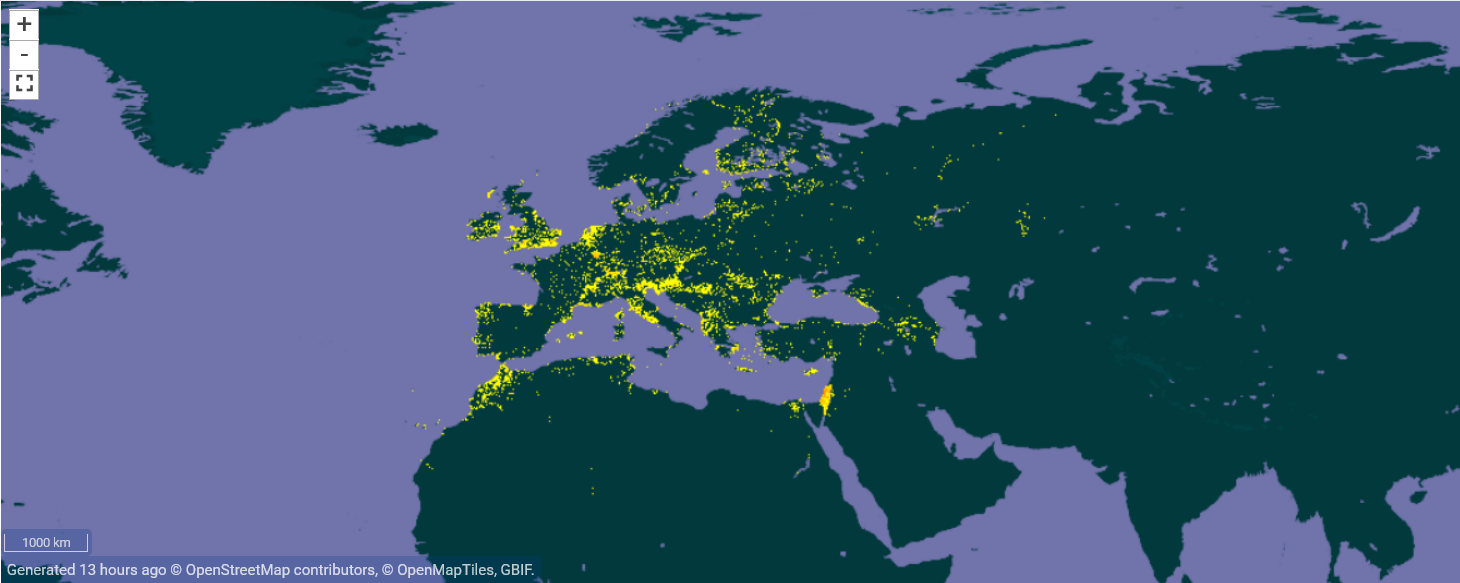
One Health in the EU goes FAIR: VectorNet Data Portal launches, with GBIF Sweden supporting data mobilization
The European Food Safety Authority (EFSA) and the European Centre for Disease Prevention and Control (ECDC) have launched the VectorNet Data Portal, providing a central access point to validated European occurrence data for vectors such as mosquitoes, ticks, sand flies, and biting midges. The portal leverages GBIF’s hosted portal infrastructure...
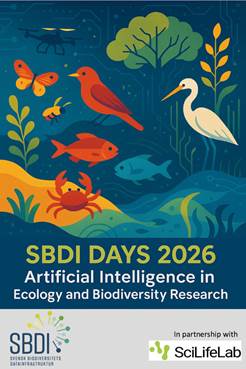
SBDI Days 2026 − Artificial Intelligence in Ecology and Biodiversity Research
Artificial Intelligence is no longer just a tool—it is becoming a vital partner in the quest to understand and protect biodiversity. SBDI Days 2026 will explore this transformative partnership under the theme: AI and Biodiversity: a Perfect Pair!
GBIF Sweden at the “Open Data – a Resource for Academia” webinar
GBIF Sweden will participate in the upcoming webinar “Open Data – a Resource for Academia,” organized by the Swedish Research Council (Vetenskapsrådet) and DIGG, the Agency for Digital Government. The event will take place on 17 October 2025, from 10:00 a.m. to 12:00 p.m., and will be held online.
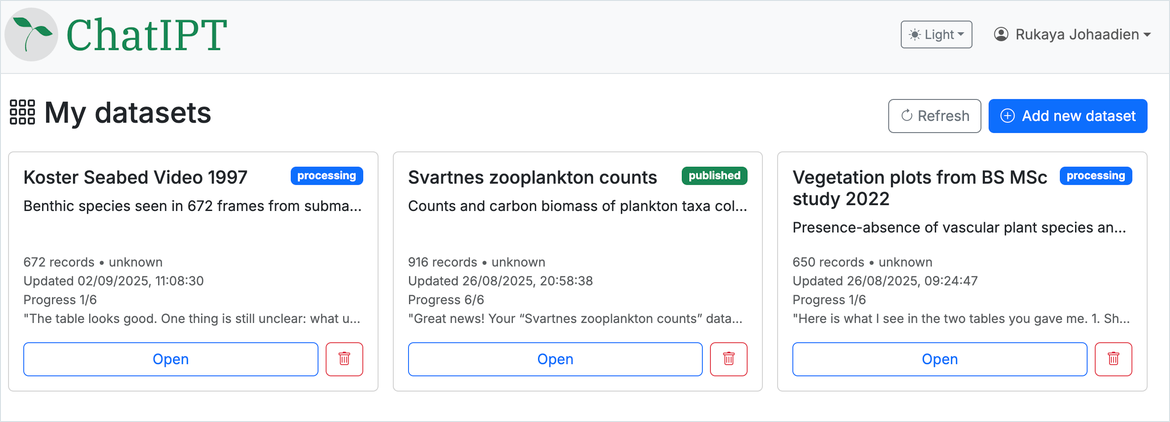
New version of ChatIPT facilitates data publication to GBIF
A new version of ChatIPT, a chatbot developed by GBIF Norway, is now available for testing. The tool is designed to help non-technical users publish biodiversity data to GBIF, lowering the threshold for researchers, students, and institutions that may not have prior experience with data publishing.ChatIPT provides an accessible interface...
GBIF releases Science Review No. 12 – spotlighting 50 new studies powered by open biodiversity data
Use of GBIF-mediated data in science continues to grow across both disciplines and geography. In the first three months of 2025 alone, GBIF logged a 27 per cent increase in papers using open biodiversity data compared to the same period the year before.The newly released GBIF Science Review No. 12...
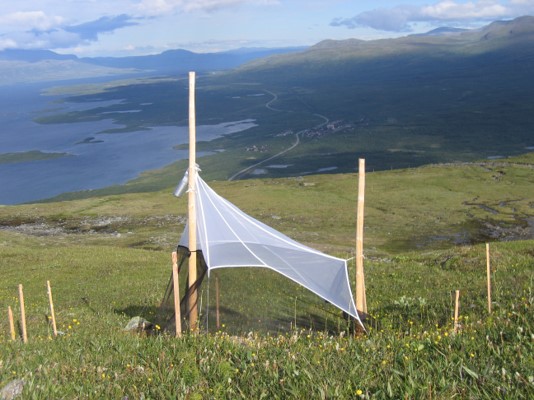
Groundbreaking Study Reveals Insect Diversity in Sweden and Madagascar – Data Now Available via GBIF and SBDI
A new study published in Nature Scientific Data presents unprecedented insights into insect biodiversity in Sweden and Madagascar. The results, emerging from the Insect Biome Atlas (IBA) project, demonstrate the vast diversity of insect life through a large-scale DNA metabarcoding survey. All data from the study are now openly available through the GBIF network.
Researchdata.se – Sweden’s new portal for research data
Today, 25 March, marks the launch of Researchdata.se, a new national web portal designed to make it easier for researchers to find, share, and reuse research data across various disciplines.
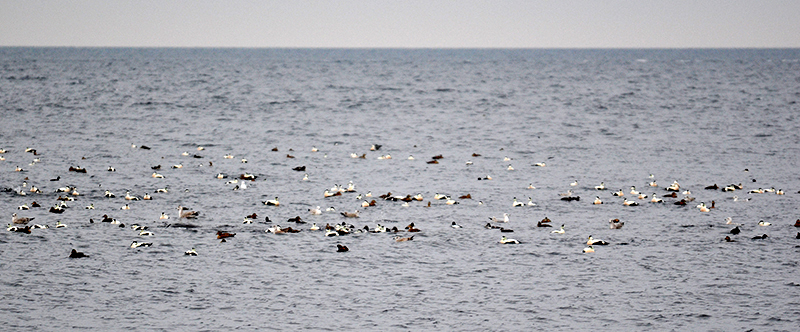
The Swedish Waterbird Census Now Published
Two new datasets from the Swedish Bird Survey have been published, covering long-term data on waterbirds from January and September counts. With over 247,000 observations of nearly 22 million birds across 73 species over 58 years , these datasets provide a crucial resource for understanding changes in Sweden’s waterbird populations in the non-breeding season.
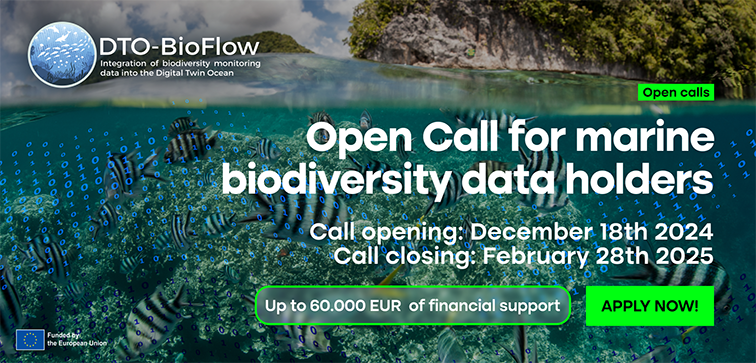
Open Call to Address Critical Marine Biodiversity Data Gaps
The DTO-BioFlow project is launching its second open call, inviting international networks, citizen science initiatives, research institutes, universities, and NGOs to contribute marine biodiversity data to the European Digital Twin of the Ocean. This initiative is aligned with the EU’s mission to restore oceans and waters by 2030, enhancing oceanographic...